The "Day Zero" Resident: Why Connectivity is the New Handover Benchmark
By Brendan Mills, National Business Development Manager, SCCI Alphatrack
In the modern MDU (Multi-Dwelling Unit) market, the handover process is the ultimate moment of truth. A resident has signed the lease, moved their boxes to the 14th floor, and is ready to settle in. But in that moment, their satisfaction isn't determined by the finish of the kitchen worktops or the view from the balcony.
It is determined by their Wi-Fi password.
Historically, the "Move-In" experience was marred by a two-week wait for an ISP engineer to visit, drill holes, and make local connections. In a world of "Instant-On" services, that delay is no longer just an inconvenience—it is a failure of the building's design.
1. The Death of the "Engineer Visit"
A few years ago, "Day One Connectivity" was a rare luxury. Today, it is a baseline expectation.
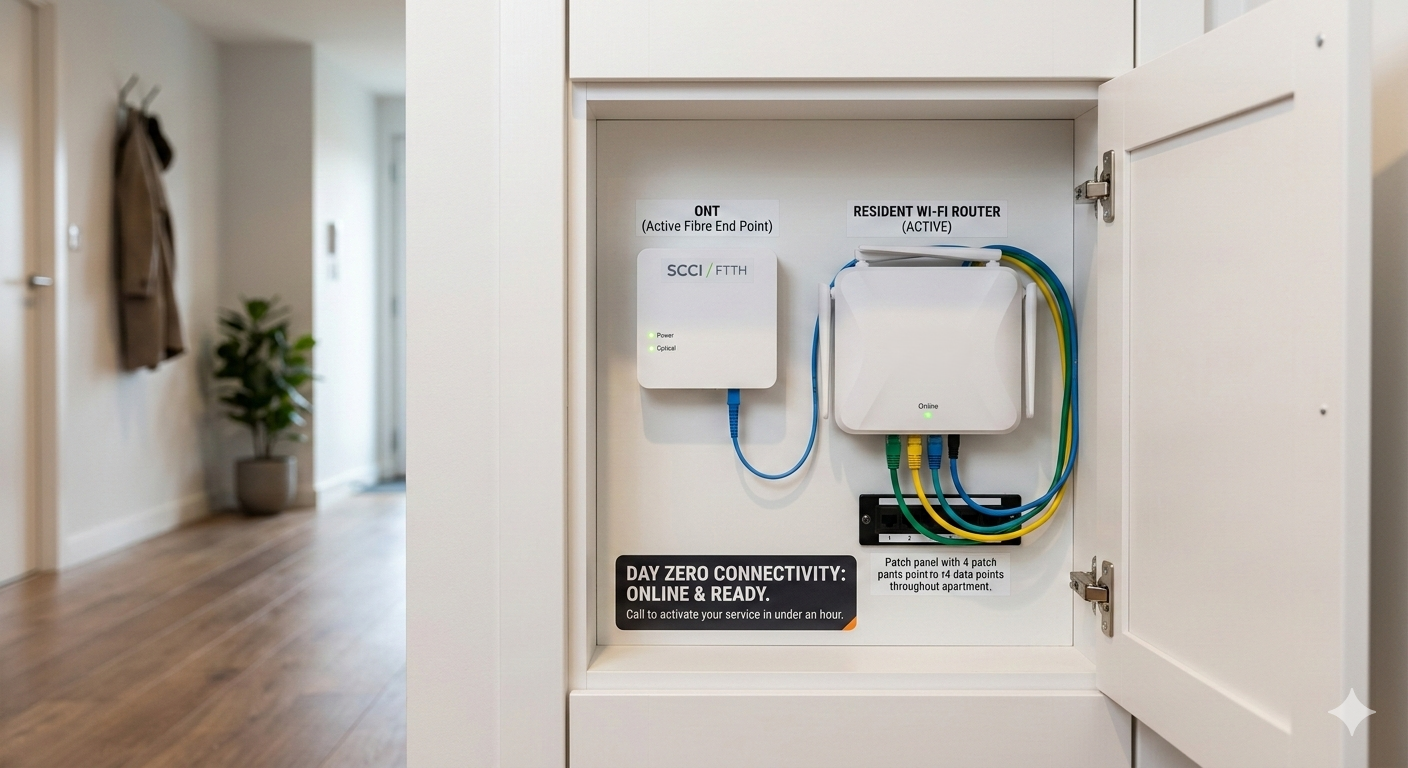
At SCCI Alphatrack, we build our projects with the goal of Zero-Friction Activation. By ensuring that the hardware—the ONT (Optical Network Terminal) and the router—is already physically installed and tested within the apartment before the tenant arrives, we remove the need for "The Man in the Van."
When a resident moves in, they shouldn't be waiting for a technician; they should be making a phone call. Because the infrastructure is "Live," they can be activated and streaming within the hour.
2. Snagging: The Silent Profit Killer
Every Developer and Main Contractor knows the pain of the "Post-Handover Snag." It’s the tail-end of a project that refuses to wag, dragging out resources and eating into margins.
The most frustrating snags are those identified after the tenant has moved in—issues that were missed during the formal handover stage. From a data and comms perspective, these often manifest as "Dead Zones" in Wi-Fi coverage or faulty ports that weren't properly commissioned.
The "Right People, Right Time" Rule: A project that has been governed correctly from RIBA Stage 2 greatly reduces these remedial works. When the right specialists are in the room early, the infrastructure is designed to be "Bulletproof." We don't just "pull cable"; we commission the system to ensure that every port and every router is fully operational before the keys are handed over.
A "Clean Handover" isn't just a goal; it's a financial necessity for the Main Contractor.
3. The Power of Choice: The 2-ISP Minimum
Reliability is built on redundancy. We aim to provide residents with at least two high-quality ISPs to choose from on day one. This competition doesn't just drive down prices for the resident; it ensures that if one provider has a network-level issue, the building remains resilient.
4. The Reputation Economy
We live in the era of the Google Review and the Trustpilot score. A resident who spends their first two weeks in a new luxury apartment using their mobile data because the "fiber isn't ready" is a resident who will vent their frustrations online.
By investing in proactive, pre-installed connectivity, Landlords and Developers aren't just buying tech—they are buying Reputation Insurance. They are ensuring that the first "Update" a resident posts about their new home is a positive one.
The Bottom Line: Transitioning to "Day Zero"
If your current projects still require residents to wait weeks for an engineer, you are operating on a legacy model.
The "Day Zero" resident expects the lights to turn on, the water to run, and the Wi-Fi to connect. My role as a National BDM is to ensure that the "Digital Utility" is as seamless and invisible as the plumbing. Let’s solve the connectivity puzzle at the design stage, so your residents can start living on day one.