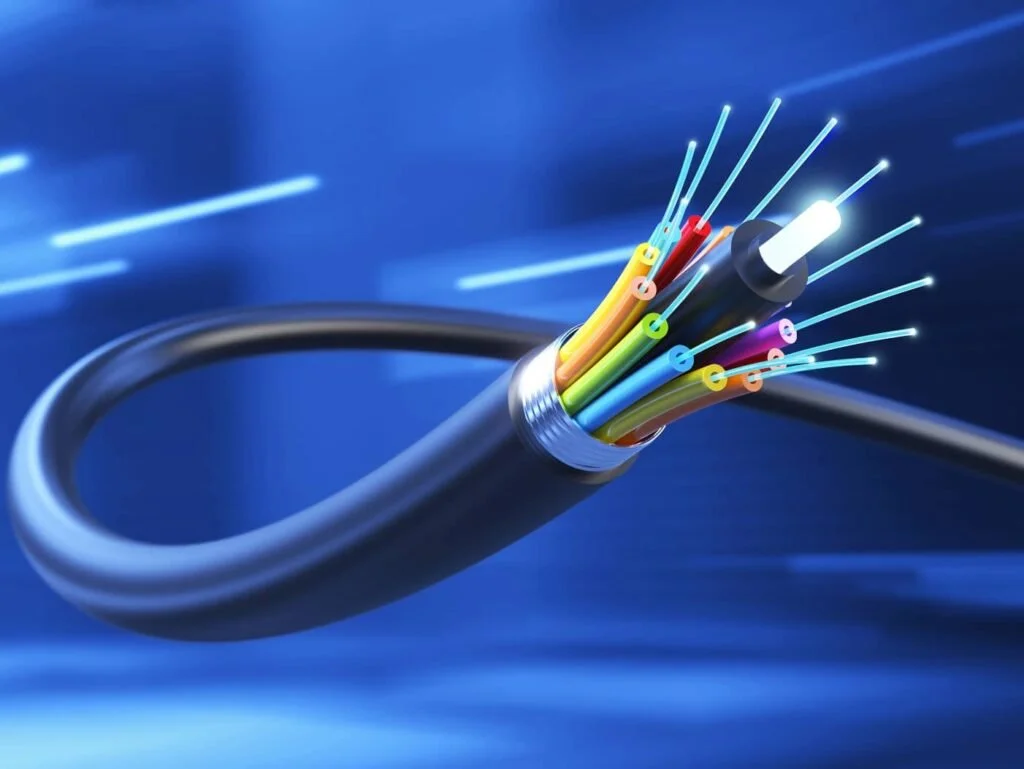
The Third Utility: Why Digital Infrastructure is the New Benchmark for Asset Value
In the history of property development, value has traditionally been anchored to the tangible: the weight of the stone, the prestige of the postcode, and the efficiency of the floor plan. But as we move further into the 2020s, a silent revolution has recalibrated the scales of asset valuation.
Today, a building can be an architectural masterpiece in a prime location, yet still be considered "sub-prime" if its digital infrastructure fails to meet the mission-critical demands of the modern occupant. High-speed, multi-provider connectivity is no longer a premium "value-add"—it has evolved into the Third Utility, as fundamental to a building's viability as water and electricity.
1. The Death of the "Plug-and-Play" Afterthought
For decades, the construction workflow treated "the network" as a fit-out item—something to be addressed by a sub-contractor during the final stages of a build. This reactive approach is now the single greatest hidden cost in modern development.
When connectivity is treated as an afterthought, the result is almost always a compromise. We see "cellular dead zones" in high-density MDUs, congested cable risers that cannot be serviced, and buildings locked into a single, restrictive ISP contract that devalues the property for future tenants.
Moving the conversation to RIBA Stage 2 changes the commercial trajectory of the project. It allows us to design for Strategic Capacity. This isn't just about pulling cables; it’s about ensuring the "digital arteries" of the building—the ducts, the risers, and the comms rooms—are sized for the 10Gbps standards of 2030, not the legacy requirements of 2015.
2. The Rise of the "Open Access" Ecosystem
The modern tenant—whether a blue-chip corporation or a high-rise resident—demands agency. They want to choose their provider based on their specific needs, not based on which ISP happened to reach the basement first.
This is where the shift from "vendor-led" to "landlord-controlled" infrastructure becomes vital. By implementing solutions like 4Fibre, we empower the developer to own the infrastructure.
Choice as a Utility: Residents can choose from a marketplace of ISPs, all operating over a single, pre-installed fiber network.
Operational Efficiency: The landlord gains a "spare" fiber path for Building Management Systems (BMS), CCTV, and IoT sensors at zero additional infrastructure cost.
The "Day Zero" Advantage: Connectivity is live before the first box is unpacked. In a competitive rental market, "instant-on" internet is a powerful psychological tool for tenant retention.
3. Resilience: The Lesson from 90 Signals Unit
My perspective on infrastructure is shaped by a career where "uptime" wasn't a goal—it was a requirement for safety. During my time in the RAF, specifically with 90 Signals Unit, I learned that communication is the lifeblood of any operation. If the link fails, the mission stops.
I bring that "zero-failure" mindset to the national stage. In the commercial world, resilience is often sacrificed for a lower initial quote. But as a National BDM, I advocate for Redundancy by Design.
Is there a secondary path if the primary fiber is compromised?
Is the hardware (like Ruckus Networks) chosen for its ability to handle peak loads without latency?
Does the design account for the thermal demands of a modern comms room?
Resilience is an investment in the building’s reputation. A building that stays online during a local outage or a hardware failure is a building that commands a higher premium.
4. Integrity and the Ethics of Specification
One of the most difficult conversations in our industry is the "Value Engineering" debate. In a climate of rising material costs, the pressure to "cut the spec" is immense. However, there is a distinct difference between cost-saving and value-eroding.
Integrity in my role means being a "trusted person in the armoury." It means telling a client when they are overpaying for a "Gold Standard" brand name like Cisco when a more agile solution fits their specific use case better. Conversely, it means standing firm when a proposed "cheap" cable swap would render the building non-compliant with future fire safety or data standards.
We don't just work in Harlow (home of Fibre Optics) or London; we operate on a national scale. This gives us a bird's-eye view of what works across the UK's most complex MDUs and commercial hubs. We use that data to ensure our clients aren't just meeting the spec—they are setting the standard.
5. Conclusion: A Call for Strategic Foresight
Monday morning is a time for setting the trajectory of the week. As you review your project pipeline, I invite you to look at your digital infrastructure not as a technical hurdle, but as a commercial asset.
The buildings that will hold their value over the next twenty years are those designed as "living organisms"—capable of adapting to new technologies without the need for invasive, expensive retrofitting.
Digital infrastructure is no longer a "tech" conversation; it’s a legacy conversation. Let’s ensure your next project is built on a foundation of choice, resilience, and strategic foresight.