The Invisible Foundation: Why RIBA Stage 2 is the Critical Window for Structured Cabling
In the world of pre-construction, the earlier a problem is spotted, the cheaper it is to fix. Yet, all too often, the digital "nervous system" of a building—its data cabling and network infrastructure—is treated as an afterthought, pushed down the timeline to Stage 4 or 5.
By the time the walls are up, the opportunity for innovation has often passed. To truly deliver a high-performance building, the conversation must start at RIBA Stage 2.
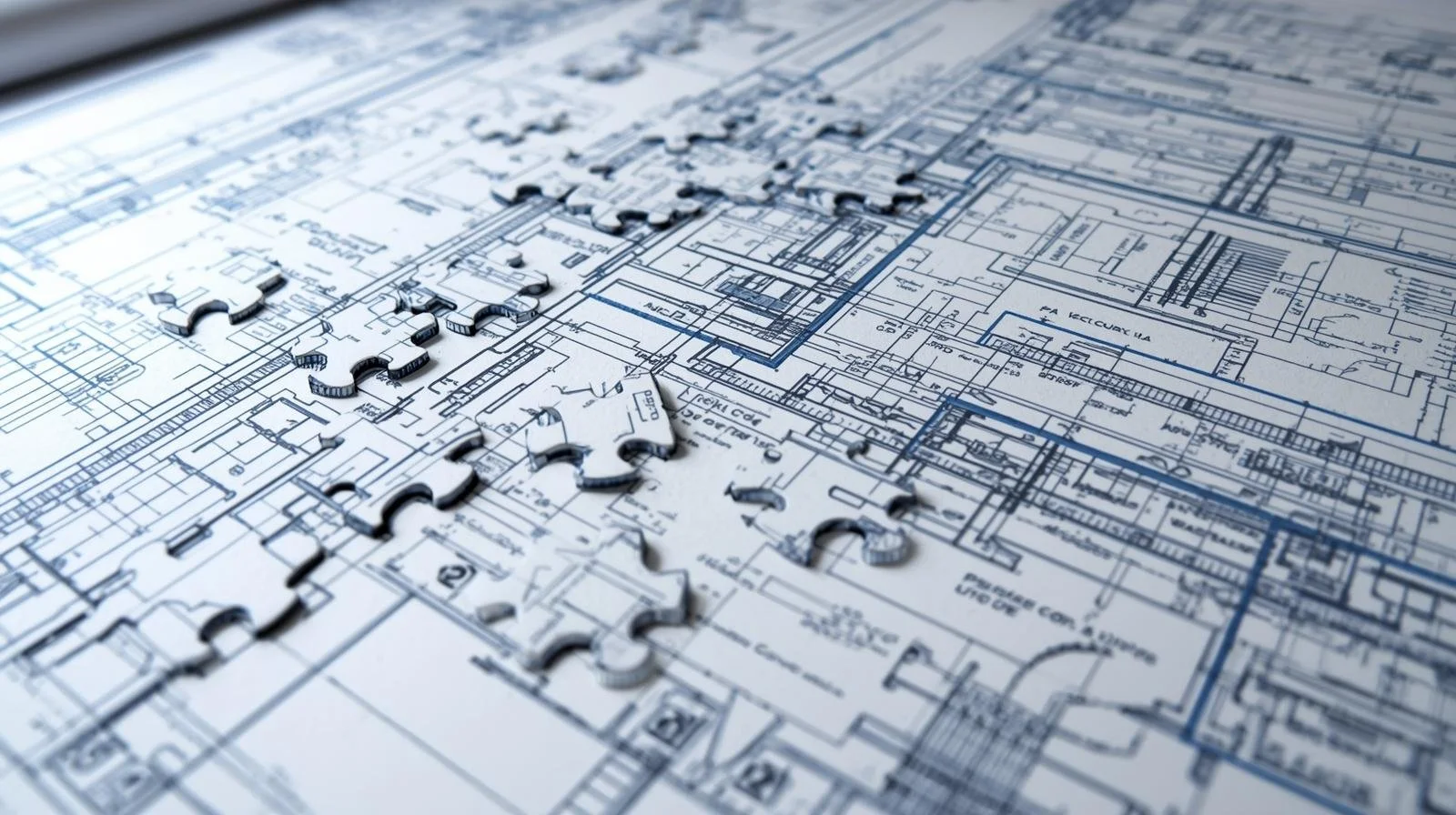
1. Designing the "Puzzle" Before the Box is Built
At Stage 2 (Concept Design), information is often sparse. This is where experience becomes a project’s greatest asset. When I review a developer’s portfolio and site plans, I’m looking for the "missing pieces" that haven't been accounted for:
The Comms Room Myth: Many designs overlook the physical footprint required for a dedicated comms room or fail to account for wall-mounted racks in risers.
Ducting Dead-ends: If the ducting between buildings isn't mapped out early, retrofitting fiber paths later becomes a logistical (and financial) nightmare.
My role is to sit with the client and turn that "blurry image" into a clear, actionable infrastructure strategy before a single brick is laid.
2. Innovation through Integration: A Leaner Approach
A recent project perfectly illustrated why a bespoke design beats a "standard" one. We were brought in because the existing design was overly complex and prohibitively expensive.
By analyzing the client’s actual needs, I proposed a solution that combined the required fiber backbone with the building's Life Safety (Fire) systems. By utilizing a fire-rated fiber backbone with high capacity, we created a system that was cheaper, leaner, and less labor-intensive—all while exceeding safety standards. That is the power of early-stage design responsibility.
3. The Future of MDUs: The Power of Choice (4Fibre)
For modern Multi-Domicile Units (MDUs), high-speed internet isn't a luxury; it’s a utility as vital as water or electricity. A tenant on the 18th floor expects the same connectivity as the ground floor, but more importantly, they expect choice.
While many developments settle for two Internet Service Providers (ISPs), providing three or more is the true benchmark for a premium development. At SCCI Group, we solve this through our 4Fibre solution.
What is 4Fibre? It is an "Open Access" fiber-to-the-home (FTTH) infrastructure that allows multiple ISPs to operate over a single, pre-installed fiber network. This eliminates the need for multiple, messy installations later and ensures residents have immediate access to a competitive market of providers from the day they move in.
4. Value Engineering vs. Spec Compliance
Budget pressures are a reality in every project. However, "Value Engineering" shouldn't mean "Lowering Standards." You cannot simply swap high-grade ethernet for a sub-par product and remain spec-compliant.
Instead, we look at the intelligence of the brand choice. While Cisco is often seen as the "Gold Standard," a Ruckus Networks system can often provide a comparable level of reliability and performance at a significantly lower cost. We help our clients navigate these trade-offs, ensuring the final choice fits both the technical requirements and the budget.
The Bottom Line
Don't wait until the site is active to think about your data. By engaging with a specialist during the pre-construction phase, you aren't just buying cable—you’re buying foresight, integration, and a future-proofed asset.